



Introduction
The International Baccalaureate (IB) programme has gained strong recognition in Singapore for developing globally minded, analytical, and well-rounded learners. With structured pathways such as the Middle Years Programme (MYP) and Diploma Programme (DP), students are expected to engage in inquiry, independent research, and conceptual understanding rather than rely on rote memorisation.
Within this framework, academic success is closely tied to the quality and suitability of the learning materials used. From textbooks and study guides to digital platforms, the right combination of resources supports both engagement and efficiency while ensuring alignment with examination standards. A clear understanding of how to identify credible IB learning materials allows students, parents, and educators to make informed, practical decisions while avoiding unnecessary confusion or duplication of effort.
In Singapore’s competitive academic environment, selecting the right resources early can also reduce last-minute stress during examination periods and create a more stable revision routine that supports long-term retention.
Key Takeaways:
- Why do the right resources matter for IB success?
They ensure alignment with current syllabuses and assessment criteria, helping students focus on how to answer questions correctly rather than adjusting to unfamiliar formats.
- How can you tell if a resource is suitable for IB?
Look for clear syllabus alignment, updated editions, recognised publishers, and content that reflects actual exam structures and command terms.
- What is the difference between MYP, DP, and IGCSE materials?
MYP focuses on interdisciplinary thinking, DP emphasises depth and independent research, while IGCSE builds foundational skills that prepare students for more advanced IB requirements.
- How should students use their resources effectively
They should combine textbooks with question banks, practise under timed conditions, and review mistakes using structured answer explanations to improve accuracy over time.
- What mistakes should be avoided when selecting study resources?
Avoid outdated editions, generic textbooks that are not IB-aligned, over-reliance on simplified online notes, and purchasing too many materials that create confusion instead of clarity.
- Why is it important to buy from a trusted provider?
A reliable source ensures access to updated editions, accurate content, and properly curated materials that match school requirements and exam expectations.
Understanding IB Learning Materials
2.1 What Are IB Learning Materials?
IB learning materials refer to textbooks, study guides, question banks, and digital tools specifically developed to align with the official IB curriculum. Each subject follows a structured framework that emphasises inquiry-based learning, conceptual understanding, and real-world application. These resources are designed not only to deliver content knowledge but also to develop the analytical and evaluative skills assessed in examinations and coursework.
In practice, they function as both academic references and guided learning systems that help students understand how to approach questions, structure responses, and apply concepts effectively. Over time, consistent exposure to well-designed resources also strengthens a student’s ability to interpret command terms accurately and respond in ways that meet IB marking criteria.
2.2 Why Are They Important for Student Success?
Using IB-aligned resources ensures that students remain consistent with current syllabuses and assessment criteria. Materials that are not specifically designed for the IB curriculum can introduce confusion due to differences in structure, command terms, and grading rubrics. In contrast, reliable IB learning materials provide clear explanations, structured examples, and guided reflection questions that mirror the expectations of actual assessments.
Many also incorporate concept-based learning strategies, reinforcing deeper understanding across subjects. This alignment allows students to build familiarity with exam requirements early, reducing uncertainty and improving performance over time while supporting stronger academic consistency. It also allows students to identify recurring question patterns, helping them refine answering techniques rather than relying solely on content memorisation.
2.3 How Are IB Learning Materials Structured Across Levels?
The structure of IB learning materials varies across different programme levels to reflect the developmental stages of students. In the MYP, resources focus on interdisciplinary learning and conceptual connections, often including reflection prompts and case studies that encourage critical thinking and analysis across subjects. This stage builds the foundation for independent thinking and inquiry. At the DP level, resources shift towards greater academic depth and independence through six subject groups, alongside core components such as the Extended Essay (EE) and Theory of Knowledge (TOK).
Students are required to engage with more complex content and demonstrate higher levels of analysis and evaluation. Course companions, exam practice books, and Internal Assessment (IA) support guides are commonly used to prepare students for final evaluations. Although the IGCSE is a separate qualification, its materials share a similar inquiry-based approach and often act as a bridge, helping students build the foundational skills required for a smoother transition into the IB Diploma Programme. Many families begin by sourcing IGCSE textbooks in Singapore to establish this early foundation and maintain continuity in academic development.
Evaluating Quality and Relevance
3.1 How Can You Tell If a Resource Is IB-Aligned?
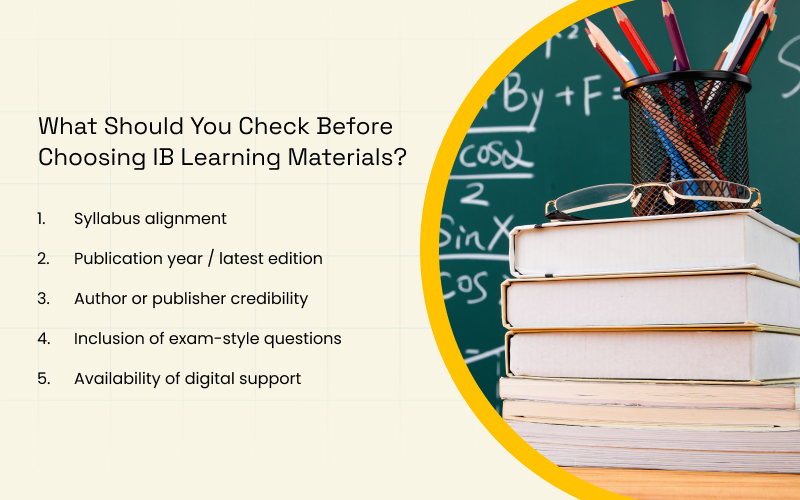
Identifying whether a resource is genuinely IB-aligned requires careful attention to specific indicators. Official materials often carry publisher endorsements or explicit references to the IB curriculum, signalling that they have been developed in accordance with syllabus requirements. Publication date is equally important, as updated editions ensure resources remain consistent with the latest curriculum changes and assessment standards.
Authorship also plays a key role, with materials written or reviewed by experienced IB educators or examiners offering greater reliability. Taking the time to verify these factors helps ensure that the material supports both subject mastery and exam readiness without introducing inconsistencies. It also helps students avoid spending time on content that may no longer be relevant to current assessment frameworks.
3.2 What Makes a Good IB Study Guide or Textbook?
A well-structured IB study guide or textbook follows the syllabus closely and presents content in a logical, accessible format. It includes clear explanations of command terms, which are essential for interpreting examination questions accurately. High-quality learning materials also feature practice questions modelled after actual IB papers, accompanied by annotated answers that demonstrate effective response techniques.
Integration of TOK and CAS (Creativity, Activity, Service) elements strengthens the connection between subject knowledge and broader IB learning objectives. Many current editions also include digital access codes, allowing students to reinforce learning through interactive platforms and additional revision tools. This supports exam-focused preparation methods that align with IB expectations while helping students progressively improve answer structure and clarity.
3.3 The Role of Digital Learning Tools
Digital learning tools have become an increasingly important component of IB preparation. E-books and online platforms provide flexible access to content, enabling students to revise at their own pace while benefiting from interactive quizzes, instant feedback, and progress tracking features. These tools are particularly useful for collaborative learning, revision planning, and targeted practice in weaker areas.
They also support independent study habits, especially for students managing multiple subjects and balancing school commitments. In addition, digital tools often allow for quick referencing and search functions, which can improve study efficiency during revision periods. However, it remains important to ensure that digital resources are sourced from official or reputable publisher platforms, with secure access and reliable compatibility.
Meeting the Needs of Different Audiences
4.1 For Students: Building Confidence Through Consistent Resources
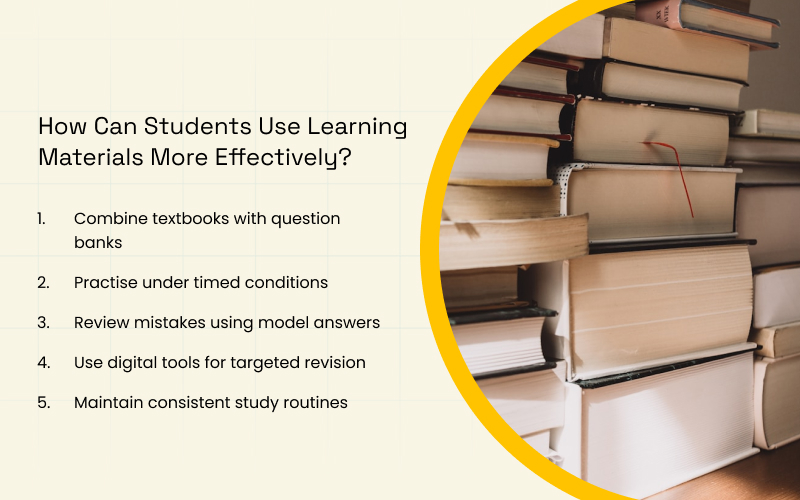
Students benefit most when their resources are consistent and aligned with the latest syllabus and examination formats. Using exam-style question banks helps develop time management skills and improves answer precision under timed conditions. A balanced approach that combines printed textbooks with digital tools allows for both in-depth study and flexible revision.
Over time, this consistency builds familiarity with exam expectations, helping students approach assessments with greater confidence and reduced stress. Access to structured IB materials also supports accurate syllabus alignment, ensuring no topics are missed while maintaining steady academic progress. This consistency becomes particularly important during intensive revision periods leading up to examinations.
4.2 For Parents: Supporting Independent Learning
Parents play an important role in supporting their child’s academic development by selecting appropriate materials and encouraging structured study habits. Familiarity with the curriculum and assessment timeline allows parents to choose resources that promote independent learning rather than memorisation. Resources that include practice questions, self-assessment features, and reflection activities are particularly effective in reinforcing understanding.
By providing access to the right materials and maintaining a consistent study environment, parents contribute to steady and sustainable academic progress. Many parents also prioritise sourcing from the best online bookstore in Singapore to ensure convenience, reliability, and access to updated editions without unnecessary delays.
4.3 For Educators: Selecting Materials That Reinforce Learning Outcomes
Educators require learning materials that go beyond content delivery to support inquiry-based and concept-driven learning. Study guides and digital tools that encourage discussion, analysis, and application can be integrated into classroom teaching to enhance engagement. Materials should also support differentiation, allowing teachers to adapt lessons to varying levels of student ability.
Regular review ensures continued alignment with current IB assessment criteria, maintaining both academic accuracy and instructional effectiveness. Well-selected materials also contribute to more structured lesson delivery and clearer progression across topics.
Choosing Trusted Publishers and Providers
4.4 Why Publisher Credibility Matters
Publisher credibility is a key factor in ensuring the reliability of IB learning materials. Established publishers that specialise in IB education undergo rigorous quality checks to maintain alignment with syllabus requirements and assessment standards. Well-known names such as Oxford University Press, Pearson Baccalaureate, Haese Mathematics, and Hodder Education produce resources that are widely recognised for their accuracy and depth.
Their publications often include exam strategies, Internal Assessment examples, and integrated TOK content, providing comprehensive support for students preparing for IB assessments. Relying on unofficial or generic materials increases the risk of misalignment with current teaching approaches and assessment expectations, which can affect both confidence and results.
4.5 The Value of Specialist Bookstores
In Singapore, specialist academic bookstores such as IB Professional play a significant role in helping students and families access reliable resources. These providers curate a wide selection of IB and IGCSE materials from trusted publishers, ensuring that content is current and syllabus-aligned. This is particularly useful for families sourcing IB books in Singapore, where accuracy and edition control are essential.
They also assist with verifying edition updates, managing school booklists, and recommending appropriate resources for different academic levels. Students preparing for examinations often rely on properly selected IB diploma textbooks to ensure alignment with current assessment requirements and subject expectations.
In addition to core subjects, they offer language learning series such as Chinese Made Easy, supporting students who require bilingual resources for IB Mandarin subjects. This level of curation reduces uncertainty, improves purchasing efficiency, and ensures that students begin their preparation with accurate and relevant materials.
Common Mistakes to Avoid When Selecting IB Learning Materials
5.1 Using Non-IB-Aligned Books
One of the most common mistakes is relying on generic international textbooks that do not follow IB’s conceptual structure or assessment frameworks. These materials may lack the specific focus required for IB examinations, leading to gaps in understanding and inconsistencies in preparation. Confirming that resources are explicitly written for the IB Diploma Programme or IB MYP helps ensure relevance and accuracy.
5.2 Ignoring Edition Updates
IB syllabuses are periodically revised, with updates affecting subject content, assessment methods, and examination formats. Using outdated editions can result in incomplete coverage of new topics or exposure to obsolete question formats. Checking publication dates and syllabus alignment before purchasing materials helps maintain consistency with current academic requirements and avoids unnecessary revision later.
5.3 Over-reliance on Online Summaries
While online summaries can provide quick reference points, they often oversimplify complex IB concepts or contain inaccuracies. These limitations can hinder deeper understanding and lead to misconceptions that affect exam performance. Official study guides and textbooks remain essential resources for comprehensive learning and should be used alongside, rather than replaced by informal online materials.
5.4 Buying Too Many Resources
Another common issue is overloading on study materials, which can overwhelm students and reduce clarity. A focused approach is more effective, typically involving one comprehensive textbook, one study guide, and one question bank per subject. Purchasing from accredited sources ensures authenticity, consistency across learning environments, and easier replacement of outdated editions when necessary.
Frequently Asked Questions
What makes IB learning materials different from regular textbooks?
IB learning materials are specifically developed to align with the International Baccalaureate curriculum and its assessment objectives. They incorporate inquiry-based tasks, Theory of Knowledge connections, and structured evaluation criteria that reflect IB’s global academic framework. Unlike general textbooks, they are designed to support both conceptual understanding and analytical skills required for IB assessments.
How often are IB textbooks updated?
IB syllabuses are typically reviewed every five to seven years, with new textbook editions released shortly after to reflect changes in subject content and assessment methods. Checking the publication year or syllabus version before purchasing ensures that the material remains relevant and aligned with current requirements.
Are digital IB resources as effective as printed textbooks?
Digital resources offer flexibility, interactive features, and immediate feedback, making them valuable for revision and self-assessment. However, printed textbooks continue to play an important role in supporting detailed study and long-term retention. A combined approach that integrates both formats tends to be the most effective for IB students.
Conclusion
Choosing the right IB learning materials involves more than simply acquiring multiple resources. It requires careful selection of materials that align with the way IB students are expected to learn, think, and apply knowledge. High-quality resources support inquiry, analysis, and reflection, helping students build confidence while navigating complex academic content. Up-to-date textbooks and study guides ensure consistency with current syllabuses, examination formats, and internal assessment expectations, allowing students to prepare with greater clarity and direction.
Explore IB Professional’s latest catalogue or reach out directly to identify the most suitable materials for your academic needs. Don’t risk purchasing outdated or misaligned resources that could affect preparation and performance, ensure you are using the correct editions from the start.



 Login with Google